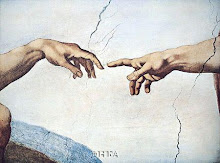
the last words spoken by someone whose words have great meaning to me...
let these words stand.
It is finished!
Love,
the Lass
Saturday, January 5, 2008
It is finished...


Friday, January 4, 2008
Remembering Bill.

In each person's life...they must simply have a friend, who is...their beacon. Someone whose light shines so brightly that it actually illuminates other lives. That was my friend Bill. He taught me to play poker, pool...and attempted to teach me darts...I never caught on. We fished together and camped together. Bill introduced me to the world of 'field teamers" and a wild world it was. But Bill was more than just a friend...he was like a father or an older brother...who, would watch over me. Something I never really gave much thought to until he was gone...and then I realized just how important that was.
Bill, believed that given the "rules" in life, that we have to live well...but not all the same. He also believed that loyalty among friends and family...was paramount. Although Bill was an expert at almost everything he did...he was most expert in understanding people. Even the coldest heart could warm up to Bill...he was just that kind of guy.
I think of Bill almost daily. I speak to his wife as often as I can...and we like to tell "Bill" stories...to keep him alive in our hearts and memories. He is important even now.
One of the things most notable about Bill, was his complete honesty with me. He would generally make me feel good...but ever now and then...he observed something he didn't like. He didn't rebuke...but he made it known...that I had done something...he found out of character for me. And when he did...I knew...it was time to reflect...no words were needed...just an expression...and I would see...it was time to re-think something.
That ability to relate honestly without making the other person feel uncomfortable was never my strong suit. Sometimes I could be difficult, and I know that. I have worked on it over the years. I also know, that even when I am less than kind in word...I am also immediately sorry...for offense is never my desire...but I have I believe offended some...I know I have.
The thing about Bill's handling of delicate situations, was his ability to communicate just what was needed...to resolve the dispute...or to make you step back...and reassess...Bill would have made a great diplomat. Maybe the fact he was so well traveled was part of his art...he could speak several languages...and broke bread with people everywhere...and never...did he break the "house rules" as he put it.
Tonight I remembered something that I shared with another friend of mine a few months ago...something that Bill observed...about me. Not just about me....but I understood his meaning.
Bill pointed out that self sufficient people are great to depend on...reliable...true, and good in a crisis...but all that aside...they can also present a picture of someone who really doesn't need anything from anyone else. Which of course is wrong. But, I can see how that would be. And so, deftly, Bill broached this subject with me many years ago...with this one observation..."When the world seems unkind....you may want to consider turning to someone...and asking for their love." I thought immediately..."but that is being weak." But, then I remembered something else..."Christ asked for the apostles to help him once...he let people care for him...and he allowed people to show him that love...or not..." That is when I realized for the first time...that although a strong person can be needed...a stronger one...let's others know they are needed. A point I sometimes forget...and need to remind myself...
Bill's life was rich in many things...he was the strongest person I have ever met...but you know...why it was easy to love him? Because...I always felt he needed me...that was his gift.
I think the lessons we learn in life are very difficult...but with the Bill's of the world, there to help us...it is much easier.
Bill is so missed...and still so loved. The strongest man I know. A protector...a man of the world...needed the ones that loved him...and he let them know it.
One other thing Bill reminded me..."between a man and a woman...no matter how self sufficient the woman is...a man still wants to be needed...it is biology." You know...he was very right about that.
I shared this with my friend...when he was asking why people had a hard time loving him...or something like that I think he understood it...and maybe we all need to think about it. Even a woman...who can move to a new place with 2 suitcases and a dream...needs those she loves...to help her ...along the way...because she needs them...but is not needy of them...a difference I believe...and one that Bill would agree...makes all the difference in the world.
I spoke with Ruth tonight...about her Bill...and it always makes me feel better...knowing...he needed me too.
So...to all those mountain climbers...don't forget to let those who love you...love you...if you get my point...
Love,
The Lass
OH...and there is this...
Standing inside the fire...one can get burned...but that is where I prefer to be...even having been burned...rejected...and rebuffed...I still tried....and that is all one can do...
I have never danced outside the fire...but being burned is part of the desire...so...Bill,...this is for you...I am still standing inside of the fire....I hope you are still in there with me..just in case I get burned..."
Love,
The Lass
Now...I love this song...but I can't resist good marketing...
I'm the only one...what a song...well here is a twist for my IT buddy...a little reminder...even IT is sexy...oh...Did I say that? haha...Well...here is a way to get your competition...where you want them...or maybe not...
Now...how is that for getting your message across? I would say...try it...can't hurt...or maybe it can...what the heck...
Love
The lass...
Oh...and I have the weekend off? You game? If not...well there is chess....I lose at that one too...
Thursday, January 3, 2008
someone I know plays guitar....and this is his favorite..
Now...I can't say I ever heard it before...but you can be sure...next time...there will be a song...on my mind...and in my heart...Oh...that would be this one. Thank you so much for sharing this with me...now I will share it with everyone else. And what a wonderful title...Since We Met...now I like that...I do believe I really like that...
What a difference a day makes...trust me...
Love,
The Lass
A friend called tonight...asked me how I was feeling...

I told him...well...this is how I am feeling...and he said...me too...
Satie's Gymnopédies
I learned to play the piece on the piano...and Erik Satie was a genius...simple and emotional...that is how it feels to both listen and play...but of the gymnopedies...number one is my favorite...so when my friend asked me...I remembered this tune which actually has been running through my head today. Sometimes people...just make you feel a certain way...this is how he made me feel...
This is what he said of himself...
As a person, I am neither good nor bad. I waver between the two, so to speak. So I have never really done harm to anyone - nor good, come to that.
All the same, I have plenty of enemies - loyal enemies, of course. Why? For the most part, it is because they don't know me - or only know me second-hand, in short, through hearsay (lies worse than death).
Man can never be perfect. I bear no grudge against them: they are the main victims of their ignorance and short-sightedness.... Poor folk!...
So I am sorry for them.
Let us pass on. I shall come back to this subject later.
Interesting perspective...I think that is why I like his work so much. please enjoy this little piece...
Wednesday, January 2, 2008
Myth and Mahjong

Myth and a game...
There are few games whose history is shrouded in quite as much myth as Mahjong. While some contend the game is over 2,500 years old, records can only verify it dating back to the mid nineteenth century, at the very earliest, likely in the provinces around Shanghai. In less than 40 years, the game went from being a local craze to creating a worldwide shortage of ivory and bone for tiles during the 1920s.
Mahjong roughly translates as "chattering sparrow". One of the many myths claim it was so named because Confucius liked birds and used the game as a teaching tool that he then took across China in his travels. However, a great many games in China claim to have been invented by Confucius, so coupled with the lack of even a single ancient tile, this theory seems unlikely. In fact, the oldest artifact identifiable as a Mahjong tile dates to the 1880s. So much for myth...but here is something interesting.
Game Over: Mahjong Can Cause Epilepsy
Posted Aug 4, 07 12:43 PM CST in World, Science & Health Editor's Choice
(newser) – Playing the traditional Chinese tile game of mahjong can induce epileptic fits, a new study from Hong Kong shows, and the only remedy is to lay off the tiles. Men were far more susceptible than women, according to the authors, and it wasn't just lack of sleep or gambling stress that provoked the attacks. • The problem is the game itself, which demands high levels of mental processing—drawing on memory, reasoning, and calculation, among other skills.To make matters worse, in China mahjong is often played in jam-packed parlors, where the actual sound of the tiles hitting the table may contribute to the seizure syndrome.
Source: BBC
A game can make you ill...Myth? or Reality?
Well then...how about this little gem?
Mahjong has also been the fall of many a woman. No...it is true, really. Let me explain. When playing the game with men, many women actually pay off their debts by having sex with the winners. Such stories are of course just rumors in the Sibu of the 50's and 60's period or just whispers which circulated quietly... like a silent revolution in the back rooms or the hair dressing salons. Well, any thing could happen between a man and woman. If the woman insists, a man cannot resist as the saying goes.
Why is this important? Well, a man I know has challenged me to a Mahjong game...and for money. I know...I shouldn't gamble...however...considering the possibility of losing...well how can I resist?
So...tonight fortunes will be at stake...and I am thinking that maybe I should lose...just to insure my friend's ego remains intact...or maybe I have other reasons...haha
So...let the games begin...hmmm...myth or reality...like the Zen Master says...we shall see.
Love,
The  Lass.
Lass.
Wish me luck...which ever way it turns out...
Monday, December 31, 2007
happy new year...
I am a little late for my east coast friends...but I have been busy...
Oh...
“What can be said in New Year rhymes,
That's not been said a thousand times?
The new years come, the old years go,
We know we dream, we dream we know.
We rise up laughing with the light,
We lie down weeping with the night.
We hug the world until it stings,
We curse it then and sigh for wings.
We live, we love, we woo, we wed,
We wreathe our prides, we sheet our dead.
We laugh, we weep, we hope, we fear,
And that's the burden of a year.”
Ella Wheeler Wilcox
love,
the lass...
and goodnight...
Congratulations!!!!!!!!
Let it be written on this night, December 31, 2007, my friends Phil and Ann have decided that regardless of their differences in temperament, religion, and musical interests...they will marry...and join those differences in the challenging...yet rewarding relationship that can only be found in marriage...And to that end, as a covenant of good Faith and fair dealing...Ann and Phil have chosen to wed, for all the right reasons and to that end have committed to remember that they love each other...and when their individual flaws and frailties come to the surface...they will without hesitation...remind each other that they could be playing solitaire...not a good game...
Please join me in wishing them great joy and happiness...
Oh...and Ann...Phil says that you have always wanted to visit a certain place...
Well...my last task...of 2007...Ann...go to the pantry. In the coffee can (which no longer has coffee) there is another message...
Well...what the heck....
Ann...you are going to Morrocco...oh...Phil will be joining you...It is called a honeymoon...I think....yep...that is what they call it. I call it...a romantic getaway...in style...
Love you both...and guess what? I am invited to the wedding...finally...whew...My work is done...haha
Here is something for you to look forward to...
Now Phil...make sure you kiss the pretty gal at midnight...I will expect a full report tomorrow...for brunch and conversation...it has been too long.
It's elementary...
Thanks for letting me join in this most memorable occasion...oh and Ann...
Your daughter and the family are Upstairs...just thought you would like to know...
Love,
The Lass...
Phil? Did I do good?
Good night and ...see you all tomorrow...
Time out...for Charles Wilson's War...

While my two friends are having dinner...and "the conversation". I took some time to finish my end of the deal...and then treated myself to a movie...Charles Wilson's War...
Charles Wilson you ask? Well...let me share...
In the early summer of 1980, Wilson read an Associated Press dispatch on the congressional wires that described hundreds of thousands of refugees fleeing Afghanistan. Few, however, were paying attention, even in the American government. According to his biographer, George Crile, Wilson placed a call to a staff member of the US Congressional Appropriations Committee who dealt with "black appropriations" (CIA funds) and requested a twofold increase in the appropriation for Afghanistan. Wilson had just been named to the Defense Appropriations subcommittee, a small panel of lawmakers in the House responsible for funding CIA operations, putting him in a position to make such an order.
This would not be the last time for Wilson to greatly increase the CIA budget for its Afghan operation. In 1983, he won the approval of $40 million more, with $17 million especially earmarked for anti-aircraft weapons that could take down Soviet Mil Mi-24 helicopters, known as the "Hind," that caused heavy damage and casualties to the Afghan Mujahideen. The following year, Wilson was approached directly by CIA officer Gust Avrakotos, who, breaking the CIA's rule against lobbying Congress for money, asked Wilson for $50 million more. Wilson agreed to the increase and convinced his colleagues in Congress by saying that "The U.S. had nothing whatsoever to do with these people's decision to fight ... But we'll be damned by history if we let them fight with stones." Wilson later succeeded in moving $300 million of unused Pentagon funds into the Afghan operation right before the end of the fiscal year. In this way, Wilson had a significant influence on the level of support the Afghan Mujahideen received from the United States.
Charles was a flawed man by any standard...and would not be invited by good Christians to tea...but like Michael the Archangel...Charlie is not that kind of angel...
He loved women...and a good bottle of scotch. But, Charlie is a man who understands power...and the need to use it...for good. So, I would say, by any measure...Charlie will have no doubt "earned his heaven points." If not...I would have to say...I would stick my mother on a long conversation with God. No doubt, the conversation is not necessary. A man of passion...does passionate things...in my book...that is perfect...
The film is great and Tom Hanks plays the person of Charlie very well. Not to mention, honestly.
If you have the opportunity see the movie...and if you do you will see what lead to the rest of the story in Afghganastan.
I think the fable of unintended consequences, recounted by Gust(CIA operative) to Charlie, really makes the point. A horse is given to a boy and the villagers rejoice. "We'll see," the Zen master says. The child falls off and breaks his leg, an unfortunate turn of events. War breaks out and the injury keeps the boy at home, a blessing, it seems. Good and bad intertwine...and that is life...and so whenever I am congratulated on something or given comfort for misfortune...my response is usually, "we shall see..."
Tonight my friend Phil is going to propose marriage to Ann...and I already know the answer...will this be happily ever after...I think the odds are very good...but like the Zen Master says...we shall see.
I have one more duty to perform tonight....So...back to work...
Oh...and Happy New Year...
Love,
the Lass
You are doing fine Ann...stick with me...
Now...you have read the letter and it contains a key...the key opens a box hidden under your Christmas tree...(which by the way I haven't seen...I digress), go to the tree...find the box...open the box...and read the instructions...
Now, I will be butting out for a while...but Ann...one more thing...don't...call me...I am on to another part of the mission which requires secrecy...and besides...my lips are sealed...
Oh...and here is a little thing I found...
Someone said this is your favorite song...
I like it too...
Oh...and Ann, have a wonderful evening...
Love,
the Lass
Ann....Phil and I had a chat many months ago...
It was on a day that Phil and I took a very long drive to Coeur D'Alene...and had the talk. Phil and I discussed a very special person...Oh, I believe her name is Ann...and Phil had discussed the "break up". Well, I discovered that I actually had met Ann...and she was in love with a jerk....oops...man... that had just ended their 5 year relationship. And...he was hitting on me...oops. Wrong woman to hit on...as Phil discovered. So...
Within the confines of that auto...and our road trip...Phil began to unravel a tale of his relationship with a woman...who he was truly meant to be with. But, Phil, being Phil...pedantic...was getting a little panicky. And he just made a foolish error. That is when I stepped in...and had "the talk". 16 hours later...and much analysis for which I was paid nothing by the way...Phil agreed, he was a "jerk"...oops...mistaken...and that,in truth, he loved and missed Ann...I knew what Phil didn't want to admit...even to himself...he was worried that he would miss out on all those wonderful women he hadn't met yet.
However, I asked Phil to tell me what he loved about you Ann...and here is what he said...
"I love the way way she listens to me."
"I love the way she makes me feel when I am around her."
"I love the way she she ignores my faults."
Then I asked him...tell me three things you don't like...
Phil, being Phil, began...well she...then he looked at me and said...you know something..."there are plenty of things she does that drive me crazy...but none that I can say I don't like."
So...me being me...asked him if he thought any other woman would want his sorry ass...and he said.."let me just say...I doubt if anyone would put up with my sorry ass...and do it without me knowing she is putting up with me."
So...hear tell Phil met you the next day...crawling back to you as it were...well not quite...I embellish...
But here is a little song we picked out...to describe the comeback...
Hit it...
Not finished Ann...more to come...but right now...I need to get some things prepared.
Oh...and Ann...look in your drawer in the kitchen...there is an envelope...read it...
Love,
the Lass
oops...the one you keep your bills in...sorry...haha
It is new year's eve...and I love movies.
One of my favorite movies is "When Harry met Sally"...isn't it on your list? Anyway...New Years Eve is here...and I just thought I would take a stroll down memory lane...and smile a bit...
So...in celebration of new beginnings and all that that brings...here is a great New Years Scene...
Now if you think I am done...nope...I have a surprise for a lady named Ann...and my co-conspirator Phil asked me to do this...so, in keeping with my vow to help a man who is both helpless and hapless....
More to come...
Love,
the Lass
Sunday, December 30, 2007
my mother....and her most recent message.
El Cid...my mother...may her tribe not increase...has sent another message. Perhaps she needs to find better things to do with her time...or perhaps she knows when I need a "message"...
Honesty
One day, when a seamstress was sewing while sitting close to a river, her thimble fell into the river. When she cried out, the Lord appeared and asked, 'My dear child, why are you crying?'
The seamstress replied that her thimble had fallen into the water and that she needed it to help her husband in making a living for their family.
The Lord dipped His hand into the water and pulled up a golden thimble set with pearls.
'Is this your thimble?' the Lord asked
The seamstress replied, 'No.'
The Lord again dipped into the river. He held out a silver thimble ringed with sapphires.
'Is this your thimble?' the Lord asked.
Again, the seamstress replied, 'No.'
The Lord reached down again and came up with a leather thimble. 'Is this your thimble?' the Lord asked.
The seamstress replied, 'Yes.'
The Lord was pleased with the woman's honesty and gave her all three thimbles to keep, and the seamstress went home happy.
Some years later, the seamstress was walking with her husband along the riverbank, and her husband fell into the river and disappeared under the water.
When she cried out, the Lord again appeared and asked her, 'Why are you crying?'
'Oh Lord, my husband has fallen into the river!'
The Lord went down into the water and came up with George Clooney.
'Is this your husband?' the Lord asked.
'Yes,' cried the seamstress.
The Lord was furious. 'You lied! That is an untruth!'
The seamstress replied, 'Oh, forgive me, my Lord It is a misunderstanding. You see, if I had said 'no' to George Clooney, you would have come up with Brad Pitt. Then if I said 'no' to him, you would have come up with my husband. Had I then said 'yes,' you would
have given me all three. Lord, I'm not in the best of health and would not be able to take care of all three husbands, so THAT'S why I said 'yes' to George Clooney.
And so the Lord let her keep him.
The moral of this story is: Whenever a woman lies, it's for a good and honorable reason, and in the best interest of others.
That's our story, and we're sticking to it.
Signed,
All Us Women
and one Lass...
back to Johnathon Livingston Seagull..
Sometimes...in the quiet of the night...I open Richard Bach's book...and my little seagull heart remembers...just what is like to fly...
Come fly with me and Johnathon...you will like it...I am sure.
Love,
the Lass
“When you have come to the edge of all the light you have
And step into the darkness of the unknown
Believe that one of the two will happen to you
Either you'll find something solid to stand on
Or you'll be taught how to fly!” Richard Bach
Two men and a hobbit....
C.S.Lewis was a good friend with Tolkien... and it is a bit of a story.
When they first met, as academics at Oxford, Lewis was a protestant atheist, Tolkien a catholic believer. However, their common interest in all things linguistic, legendary and Nordic brought them together. The bond was sealed when Lewis became a Christian. Lewis was one of the first people to whom Tolkien showed 'The Hobbit'.
Oh one night the two men argued...or "discussed" ...
On a warm September night in 1931, three men went for an after-dinner walk on the grounds of Magdalen College, part of Oxford University. They took a stroll on Addison's Walk, a beautiful tree-shaded path along the River Cherwell, and got into an argument that lasted into the wee hours of the morning -- and left a lasting mark on world literature.
At the time, only one of the men had any kind of reputation: Henry Victor Dyson, a bon vivant scholar who had shared tables and bandied words with the likes of T.E. Lawrence, Virginia Woolf and Bertrand Russell. His two companions were little-known Oxford academics with a shared taste for Icelandic sagas, Anglo-Saxon verse and the austere cultural mystique of "the North." Few people remember Dyson now, while millions celebrate the names of his companions: C.S. Lewis and J.R.R. Tolkien.
Yet the works that made their reputations -- "The Hobbit" and "The Lord of the Rings" for Tolkien, "The Chronicles of Narnia" for Lewis -- were profoundly shaped by that night-long argument and the bond it cemented. It's possible that Tolkien's Middle-earth would have remained entirely a private obsession, and quite likely that Lewis would never have found the gateway to Narnia.
"Lovers seek for privacy," Lewis wrote in "The Four Loves" (1960). "Friends find this solitude about them, this barrier between them and the herd, whether they want it or not." Lewis and Tolkien quickly found this cozy solitude after they met in 1926, during a gathering of the English faculty at Merton College. Both men had fought in World War I, and come back scarred by its industrial savagery. They had seen the worst the 20th century had to offer ...up to that point, anyway...and took paradoxical comfort in studying blood-soaked Viking Age stories of ambiguous heroes and gods battling monsters and the outer darkness, tales short on the milk of human kindness but long on sardonic humor. ("Broad spears are becoming fashionable nowadays," a character remarks in "Grettir's Saga," just after being pierced with one.)
On that fateful night in 1931, Lewis was in the midst of a fretful return to religious faith. Raised as an Irish Protestant, he had become an agnostic as a teenager. Though he came back to accepting the idea of a divine presence in 1929, he continued to resist Christianity. It remained for Dyson, a High Anglican, and Tolkien, a devout Roman Catholic, to push him over the threshold -- though it literally took them all night. As they marched back and forth along Addison's Walk, Tolkien argued for the literal and mythological truth of the Resurrection of Christ.
By all accounts, the key moment came when Lewis declared that myths are lies, albeit "lies breathed through silver." Tolkien replied, "No, they are not," and demanded to know why Lewis could accept Icelandic sagas as vehicles of truth while demanding that the Gospels meet some higher standard. Hours past midnight, Tolkien finally went home to bed, leaving Dyson to carry on the campaign. Tolkien's argument -- that the Resurrection was the truest of all stories, with God as its poet -- may not sound particularly convincing to nonbelievers (nor indeed to some Christians), but to a man committed to the idea of myth as the only way to express higher truths, it was irresistible. Two weeks later, Lewis told a friend he had once again fully embraced Christianity: "My long night talk with Dyson and Tolkien had a good deal to do with it."
"The Pilgrim's Regress," Lewis produced a torrent of books, essays, novels and radio talks, all works of Christian apologetics or stories with obvious spiritual preoccupations. Even as he churned out these works, Lewis prodded Tolkien to pull together and complete his stories of Middle-earth -- the private universe that had preoccupied him for most of his life. Thanks to that ceaseless, friendly prodding, Tolkien published "The Hobbit" to great acclaim in 1937. The prodding continued during the long, fitful gestation of its out sized sequel, "The Lord of the Rings," which finally saw the light of print in the mid-1950s. "The unpayable debt that I owe to [Lewis] was not 'influence' as it is ordinarily understood but sheer encouragement," Tolkien recalled. "He was for long my only audience. Only from him did I ever get the idea that my 'stuff' could be more than a private hobby."
It seems that the collaboration between these two men began with an argument and ended with something transcendent...a kinship of encouragement. You see that is what to me friendship is. It isn't the mindless yes...or agreement that too often fellow travelers find...but rather the forcing to the surface the real parts of us...that make use move in the direction we must...or should. Friendships like theirs are not found in apathetic, dreary compliments, but rather the tugging, pulling, prodding...forcing of thought...and that to me is what sets apart true friendships. It is the outcome...it is our desire to reach the other persons...person. It is what makes us better.
And the proof is...both men offered themselves and the world better literature and the love of a hobbit and a lion...and a fateful night...became a literary marriage of friendship...encouragement...and transformation...through thoughtful argument.
I rather like that. If I were to examine my most dear friendships...it would be the ones that did not compliment me...but forced me to think...made me argue with my own position...in that way...changing...and altering my course, hopefully for the better.
A question...is sometimes the only thing that an honest friend can ask...
I hope that one day...I can ask such a question...for a friend...
oh...and Ramble On...I just love this tune...you should too...if you love a hobbit.
Love,
the Lass
My very first book...Hans Christian Andersen
My mother believed in reading. She still does. Books were sacred things in my home. They were to my family the place to find the answers...and to take us to places we would never visit...or simply to entertain. But books were our daily bread.
My first book was the written by Hans Christian Andersen. And one of the tales I read was this one...
The Shepherd’s Story of the Bond of Friendship
by
Hans Christian Andersen
(1842)
THE little dwelling in which we lived was of clay, but the door-posts were columns of fluted marble, found near the spot on which it stood. The roof sloped nearly to the ground. It was at this time dark, brown, and ugly, but had originally been formed of blooming olive and laurel branches, brought from beyond the mountains. The house was situated in a narrow gorge, whose rocky walls rose to a perpendicular height, naked and black, while round their summits clouds often hung, looking like white living figures. Not a singing bird was ever heard there, neither did men dance to the sound of the pipe. The spot was one sacred to olden times; even its name recalled a memory of the days when it was called “Delphi.” Then the summits of the dark, sacred mountains were covered with snow, and the highest, mount Parnassus, glowed longest in the red evening light. The brook which rolled from it near our house, was also sacred. How well I can remember every spot in that deep, sacred solitude! A fire had been kindled in the midst of the hut, and while the hot ashes lay there red and glowing, the bread was baked in them. At times the snow would be piled so high around our hut as almost to hide it, and then my mother appeared most cheerful. She would hold my head between her hands, and sing the songs she never sang at other times, for the Turks, our masters, would not allow it. She sang,—
“On the summit of mount Olympus, in a forest of dwarf firs, lay an old stag. His eyes were heavy with tears, and glittering with colors like dewdrops; and there came by a roebuck, and said, ’What ailest thee, that thou weepest blue and red tears?’ And the stag answered, ’The Turk has come to our city; he has wild dogs for the chase, a goodly pack.’ ’I will drive them away across the islands!’ cried the young roebuck; ’I will drive them away across the islands into the deep sea.’ But before evening the roebuck was slain, and before night the hunted stag was dead.”
And when my mother sang thus, her eyes would become moist; and on the long eyelashes were tears, but she concealed them and watched the black bread baking in the ashes. Then I would clench my fist, and cry, “We will kill these Turks!” But she repeated the words of the song, “I will drive them across the islands to the deep sea; but before evening came the roebuck was slain, and before the night the hunted stag was dead.”
We had been lonely in our hut for several days and nights when my father came home. I knew he would bring me some shells from the gulf of Lepanto, or perhaps a knife with a shining blade. This time he brought, under his sheep-skin cloak, a little child, a little half-naked girl. She was wrapped in a fur; but when this was taken off, and she lay in my mother’s lap, three silver coins were found fastened in her dark hair; they were all her possessions. My father told us that the child’s parents had been killed by the Turks, and he talked so much about them that I dreamed of Turks all night. He himself had been wounded, and my mother bound up his arm. It was a deep wound, and the thick sheep-skin cloak was stiff with congealed blood. The little maiden was to be my sister. How pretty and bright she looked: even my mother’s eyes were not more gentle than hers. Anastasia, as she was called, was to be my sister, because her father had been united to mine by an old custom, which we still follow. They had sworn brotherhood in their youth, and the most beautiful and virtuous maiden in the neighborhood was chosen to perform the act of consecration upon this bond of friendship. So now this little girl was my sister. She sat in my lap, and I brought her flowers, and feathers from the birds of the mountain. We drank together of the waters of Parnassus, and dwelt for many years beneath the laurel roof of the hut, while, winter after winter, my mother sang her song of the stag who shed red tears. But as yet I did not understand that the sorrows of my own countrymen were mirrored in those tears.
One day there came to our hut Franks, men from a far country, whose dress was different to ours. They had tents and beds with them, carried by horses; and they were accompanied by more than twenty Turks, all armed with swords and muskets. These Franks were friends of the Pacha, and had letters from him, commanding an escort for them. They only came to see our mountain, to ascend Parnassus amid the snow and clouds, and to look at the strange black rocks which raised their steep sides near our hut. They could not find room in the hut, nor endure the smoke that rolled along the ceiling till it found its way out at the low door; so they pitched their tents on a small space outside our dwelling. Roasted lambs and birds were brought forth, and strong, sweet wine, of which the Turks are forbidden to partake.
When they departed, I accompanied them for some distance, carrying my little sister Anastasia, wrapped in a goat-skin, on my back. One of the Frankish gentlemen made me stand in front of a rock, and drew us both as we stood there, so that we looked like one creature. I did not think of it then, but Anastasia and I were really one. She was always sitting on my lap, or riding in the goat-skin on my back; and in my dreams she always appeared to me.
Two nights after this, other men, armed with knives and muskets, came into our tent. They were Albanians, brave men, my mother told me. They only stayed a short time. My sister Anastasia sat on the knee of one of them; and when they were gone, she had not three, but two silver coins in her hair—one had disappeared. They wrapped tobacco in strips of paper, and smoked it; and I remember they were uncertain as to the road they ought to take. But they were obliged to go at last, and my father went with them. Soon after, we heard the sound of firing. The noise continued, and presently soldiers rushed into our hut, and took my mother and myself and Anastasia prisoners. They declared that we had entertained robbers, and that my father had acted as their guide, and therefore we must now go with them. The corpses of the robbers, and my father’s corpse, were brought into the hut. I saw my poor dead father, and cried till I fell asleep. When I awoke, I found myself in a prison; but the room was not worse than our own in the hut. They gave me onions and musty wine from a tarred cask; but we were not accustomed to much better fare at home. How long we were kept in prison, I do not know; but many days and nights passed by. We were set free about Easter-time. I carried Anastasia on my back, and we walked very slowly; for my mother was very weak, and it is a long way to the sea, to the Gulf of Lepanto.
On our arrival, we entered a church, in which there were beautiful pictures in golden frames. They were pictures of angels, fair and bright; and yet our little Anastasia looked equally beautiful, as it seemed to me. In the centre of the floor stood a coffin filled with roses. My mother told me it was the Lord Jesus Christ who was represented by these roses. Then the priest announced, “Christ is risen,” and all the people greeted each other. Each one carried a burning taper in his hand, and one was given to me, as well as to little Anastasia. The music sounded, and the people left the church hand-in-hand, with joy and gladness. Outside, the women were roasting the paschal lamb. We were invited to partake; and as I sat by the fire, a boy, older than myself, put his arms round my neck, and kissed me, and said, “Christ is risen.” And thus it was that for the first time I met Aphtanides.
My mother could make fishermen’s nets, for which there was a great demand here in the bay; and we lived a long time by the side of the sea, the beautiful sea, that had a taste like tears, and in its colors reminded me of the stag that wept red tears; for sometimes its waters were red, and sometimes green or blue. Aphtanides knew how to manage our boat, and I often sat in it, with my little Anastasia, while it glided on through the water, swift as a bird flying through the air. Then, when the sun set, how beautifully, deeply blue, would be the tint on the mountains, one rising above the other in the far distance, and the summit of mount Parnassus rising above them all like a glorious crown. Its top glittered in the evening rays like molten gold, and it seemed as if the light came from within it; for long after the sun had sunk beneath the horizon, the mountain-top would glow in the clear, blue sky. The white aquatic birds skimmed the surface of the water in their flight, and all was calm and still as amid the black rocks at Delphi. I lay on my back in the boat, Anastasia leaned against me, while the stars above us glittered more brightly than the lamps in our church. They were the same stars, and in the same position over me as when I used to sit in front of our hut at Delphi, and I had almost begun to fancy I was still there, when suddenly there was a splash in the water—Anastasia had fallen in; but in a moment Aphtanides has sprung in after her, and was now holding her up to me. We dried her clothes as well as we were able, and remained on the water till they were dry; for we did not wish it to be known what a fright we had had, nor the danger which our little adopted sister had incurred, in whose life Aphtanides had now a part.
The summer came, and the burning heat of the sun tinted the leaves of the trees with lines of gold. I thought of our cool mountain-home, and the fresh water that flowed near it; my mother, too, longed for if, and one evening we wandered towards home. How peaceful and silent it was as we walked on through the thick, wild thyme, still fragrant, though the sun had scorched the leaves. Not a single herdsman did we meet, not a solitary hut did we pass; everything appeared lonely and deserted—only a shooting star showed that in the heavens there was yet life. I know not whether the clear, blue atmosphere gleamed with its own light, or if the radiance came from the stars; but we could distinguish quite plainly the outline of the mountains. My mother lighted a fire, and roasted some roots she had brought with her, and I and my little sister slept among the bushes, without fear of the ugly smidraki,1 from whose throat issues fire, or of the wolf and the jackal; for my mother sat by us, and I considered her presence sufficient protection.
We reached our old home; but the cottage was in ruins, and we had to build a new one. With the aid of some neighbors, chiefly women, the walls were in a few days erected, and very soon covered with a roof of olive-branches. My mother obtained a living by making bottle-cases of bark and skins, and I kept the sheep belonging to the priests, who were sometimes peasants,2 while I had for my playfellows Anastasia and the turtles.
Once our beloved Aphtanides paid us a visit. He said he had been longing to see us so much; and he remained with us two whole happy days. A month afterwards he came again to wish us good-bye, and brought with him a large fish for my mother. He told us he was going in a ship to Corfu and Patras, and could relate a great many stories, not only about the fishermen who lived near the gulf of Lepanto, but also of kings and heroes who had once possessed Greece, just as the Turks possess it now.
I have seen a bud on a rose-bush gradually, in the course of a few weeks, unfold its leaves till it became a rose in all its beauty; and, before I was aware of it, I beheld it blooming in rosy loveliness. The same thing had happened to Anastasia. Unnoticed by me, she had gradually become a beautiful maiden, and I was now also a stout, strong youth. The wolf-skins that covered the bed in which my mother and Anastasia slept, had been taken from wolves which I had myself shot.
Years had gone by when, one evening, Aphtanides came in. He had grown tall and slender as a reed, with strong limbs, and a dark, brown skin. He kissed us all, and had so much to tell of what he had seen of the great ocean, of the fortifications at Malta, and of the marvellous sepulchres of Egypt, that I looked up to him with a kind of veneration. His stories were as strange as the legends of the priests of olden times.
“How much you know!” I exclaimed, “and what wonders you can relate?”
“I think what you once told me, the finest of all,” he replied; “you told me of a thing that has never been out of my thoughts—of the good old custom of ’the bond of friendship,’—a custom I should like to follow. Brother, let you and I go to church, as your father and Anastasia’s father once did. Your sister Anastasia is the most beautiful and most innocent of maidens, and she shall consecrate the deed. No people have such grand old customs as we Greeks.”
Anastasia blushed like a young rose, and my mother kissed Aphtanides.
At about two miles from our cottage, where the earth on the hill is sheltered by a few scattered trees, stood the little church, with a silver lamp hanging before the altar. I put on my best clothes, and the white tunic fell in graceful folds over my hips. The red jacket fitted tight and close, the tassel on my Fez cap was of silver, and in my girdle glittered a knife and my pistols. Aphtanides was clad in the blue dress worn by the Greek sailors; on his breast hung a silver medal with the figure of the Virgin Mary, and his scarf was as costly as those worn by rich lords. Every one could see that we were about to perform a solemn ceremony. When we entered the little, unpretending church, the evening sunlight streamed through the open door on the burning lamp, and glittered on the golden picture frames. We knelt down together on the altar steps, and Anastasia drew near and stood beside us. A long, white garment fell in graceful folds over her delicate form, and on her white neck and bosom hung a chain entwined with old and new coins, forming a kind of collar. Her black hair was fastened into a knot, and confined by a headdress formed of gold and silver coins which had been found in an ancient temple. No Greek girl had more beautiful ornaments than these. Her countenance glowed, and her eyes were like two stars. We all three offered a silent prayer, and then she said to us, “Will you be friends in life and in death?”
“Yes,” we replied.
“Will you each remember to say, whatever may happen, ’My brother is a part of myself; his secret is my secret, my happiness is his; self-sacrifice, patience, everything belongs to me as they do to him?’ ”
And we again answered, “Yes.” Then she joined out hands and kissed us on the forehead, and we again prayed silently. After this a priest came through a door near the altar, and blessed us all three. Then a song was sung by other holy men behind the altar-screen, and the bond of eternal friendship was confirmed. When we arose, I saw my mother standing by the church door, weeping.
How cheerful everything seemed now in our little cottage by the Delphian springs! On the evening before his departure, Aphtanides sat thoughtfully beside me on the slopes of the mountain. His arm was flung around me, and mine was round his neck. We spoke of the sorrows of Greece, and of the men of the country who could be trusted. Every thought of our souls lay clear before us. Presently I seized his hand: “Aphtanides,” I exclaimed, “there is one thing still that you must know,—one thing that till now has been a secret between myself and Heaven. My whole soul is filled with love,—with a love stronger than the love I bear to my mother and to thee.”
“And whom do you love?” asked Aphtanides. And his face and neck grew red as fire.
“I love Anastasia,” I replied.
Then his hand trembled in mine, and he became pale as a corpse. I saw it, I understood the cause, and I believe my hand trembled too. I bent towards him, I kissed his forehead, and whispered, “I have never spoken of this to her, and perhaps she does not love me. Brother, think of this; I have seen her daily, she has grown up beside me, and has become a part of my soul.”
“And she shall be thine,” he exclaimed; “thine! I may not wrong thee, nor will I do so. I also love her, but tomorrow I depart. In a year we will see each other again, but then you will be married; shall it not be so? I have a little gold of my own, it shall be yours. You must and shall take it.”
We wandered silently homeward across the mountains. It was late in the evening when we reached my mother’s door. Anastasia held the lamp as we entered; my mother was not there. She looked at Aphtanides with a sweet but mournful expression on her face. “To-morrow you are going to leave us,” she said. “I am very sorry.”
“Sorry!” he exclaimed, and his voice was troubled with a grief as deep as my own. I could not speak; but he seized her hand and said, “Our brother yonder loves you, and is he not dear to you? His very silence now proves his affection.”
Anastasia trembled, and burst into tears. Then I saw no one, thought of none, but her. I threw my arms round her, and pressed my lips to hers. As she flung her arms round my neck, the lamp fell to the ground, and we were in darkness, dark as the heart of poor Aphtanides.
Before daybreak he rose, kissed us all, and said “Farewell,” and went away. He had given all his money to my mother for us. Anastasia was betrothed to me, and in a few days afterwards she became my wife.
Love stories always attracted me...partly because as a little girl I was struck by the tenderness of it...and for some reason, it seemed to me that it would always be something for others. Odd for a little girl...even odder for a grown woman...
But Hans Christian Anderson provided me with many entertaining lessons in life...and pictures of people as another person saw them...his vision...became mine for a moment.
Perhaps it was his love of literature that gave me reason to love his tales. I carried his book with me everywhere...while my friends played with dolls...I kept company with my friend Hans...and his friends.
Hans displayed great intelligence and imagination as a young boy, a trait fostered by the indulgence of his parents and by the superstition of his mother. He made himself a small toy-theatre and sat at home making clothes for his puppets, and reading all the plays that he could lay his hands upon; among them were those of Ludvig Holberg and William Shakespeare. Throughout his childhood, he had a passionate love for literature. He was known to memorize entire plays by Shakespeare and to recite them using his wooden dolls as actors. He was also a great lover of the art of banter...we shared that one...and assisted in initiating a society of like minded banterers amongst his friends.
Well...Hans...was simply...Hans Christian Andersen...
How could someone not love the story teller? Oh..and sometimes an ugly duckling becomes a swan...
well from this ugly duckling...a swan looks quite odd...
love the lass...
oh...and you might want to know this...
Andersen fell in love with Riborg Voigt, who was secretly engaged to the local chemist's son. "She has a lovely, pious face, quite child-like, but her eyes looker clever and thoughtful, they were brown and very vivid," Andersen remembered in The Book of My Life. Riborg married the chemists's son, Poul Bøving, in 1831. A leather pouch containing a letter from Riborg was found round Andersen's neck when he died.
Andersen never married...but that did not stop him from loving...and giving love to the world...I think that I understand that...
Friday, December 28, 2007
Atonement...a word...an act...is it possible?
atonement:Amends or reparation made for an injury or wrong; expiation.
Maybe Gandhi knew...
Picture Gandhi near death from starvation when a crazed man, a Hindu, arrives with food that he insists Gandhi must eat. He demands, "Here! Eat! Eat! I'm going to hell - but not with your death on my soul!"
Gandhi replies, "Only God decides who goes to hell."
"I killed a child!" the man confesses. "I smashed his head against a wall!"
Gandhi asks, "Why?"
"Because they killed our son... my boy! The Muslims killed my son!"
Gandhi sees the man's unbearable grief and remorse. He gently tells him, "I know a way out of hell. Find a child, a child whose mother and father have been killed - a little boy - and raise him as your own. Only be sure that he is a Muslim..."
The man's expression changes to one of hope. He suddenly sees a way in can undo what he has done and effect a restitution. He can replace his own son and provide a Muslim orphan with a home and parents. It is a perfect solution.
And then the Mahatma adds, "And you must raise him as a Muslim."
A look of horror and incredulity comes over the man's face. He had not counted on this degree of atonement. He drops to his knees and sobs.
We often are able to express our regret. And yes, we accept penance. If we have stolen money or other goods we know we need to make restitution. But this merely takes the event back to the status quo ante. We give back what we stole or pay for it in cash. We repair what we damage or replace it. We print a retraction or publicly apologize. Or, we balance the destruction of one life by giving life to someone who would surely perish without our help.
But this is not enough. It is as if the act of sinning takes us into negative numbers and restitution simply takes us back to zero on the number line. The slate is clean. It's as if we had never sinned at all. Or so we tell ourselves. In fact, in order for true atonement to occur, we must go into the positive numbers, remake ourselves from the sinner who harmed, who hated, who contemptuously stole, cheated, or destroyed, into a person who benefits, loves, and is honest and generous. In short, we have to transform ourselves from one who harmed an enemy into a caring person who benefits that same enemy. Loving our enemies is the greatest of challenges but one that all religions mandate as the ultimate test of redemption.
Absolving a man of sin and giving him the chore of restitution does not correct the man.
After he writes his check - or has someone else write it for him - he remains the same hateful individual, the same bigot, the same thief or killer. He may even become more hateful towards those he has harmed, more filled with resentment for having been exposed and punished. The lesson he learns is that crime carries a penalty, one that can be embarrassing or inconvenient, or expensive. If he changes at all it is either to be more careful the next time he vents his rage or sins, or else to calculate that the sin isn't worth the trouble.
It is not enough to ask for forgiveness, to say, "I'm so sorry." A sinner has placed himself in his own hell and others cannot pull him out of that hell by their acts of forgiveness. He has to do this for himself. He can compensate the victim or he can be put in jail as punishment for his crime. But until he remakes himself into the kind of person who does not commit such crimes, he cannot restore the necessary balance. In Newtonian terms, "For every action there is an equal and opposite reaction." It was in that "opposite" reaction that Gandhi saw the man's redemption. The Hindu man who in his hatred had killed an innocent Muslim child must adopt a needy Muslim child and by raising him as his own son, discover the true beauty of Islam. He did not have to forsake his own religion. But he did have to be converted from the false Hinduism of ignorant hatred to the true Hinduism of understanding, love and tolerance.
Christians teach that our sins require atonement. Offenders are obliged to repent, apologize, and give as reparation and penance something of value to God whom they have offended. However, due to the enormity of the sin, which is against the holiness of God, and the poverty of their own good, they lack adequate resources to make proper reparation and penance. However, Christians can appropriate Christ's life and death as a sacrifice, "an offering made available to us men to offer as our reparation and penance.... It is simply a costly penance and reparation sufficient for a merciful God to let men off the rest." God allows the Son to sacrifice himself so that we can apply the merits of his innocent death to atone for our sins. Consequently, the model of atonement on which he settles is that of a sacrifice that makes resources available to needy sinners.
Christ's sacrificial death "has no efficacy until men choose to plead it in atonement for their sins. In so far as Christ the Son is distinct from God the Father, the sacrifice takes place independently of us, but even here we can hardly gain the benefit of forgiveness from it until we associate ourselves with it.... The sinner has to use Christ's death to get forgiveness." But then is this view of atonement available to the religious inclusivist? According to the Christian inclusivist, salvation has both an objective and a subjective dimension. The objective dimension involves Christ's death as atonement for our sins. The subjective dimension includes, among other things, the individual's faith and good acts. While only Christianity makes clear Christ's atoning provision, God can be encountered and his grace manifested in various ways through diverse religions. Salvation is available for everyone, regardless of what religion they practice or whether they have heard about Christ's sacrifice, though it does not follow for the inclusivist that all are saved or that all religions provide equally adequate means to facilitate the discovery of God or spiritual development.
The movie Atonement makes you think...because it examines the the consequences of an act that is wrong...and whose author must suffer...and atone...but how?
The question of atonement is a good one...and I believe Gandhi had it right. I also believe that without true atonement...we cannot transform from what created the transgression to begin with. Sometimes it is merely the chicken or the egg question. Was I wronged because I caused the wrong, and when in my judgement of the wrong, will I find redemption? If you don't find peace...then you cannot find redemption...and forgiveness is therefore not enough...nor is making reparations alone...one must not simply come to a zero sum...the balance sheet must have a positive asset and therefore, we must go beyond what seems easy.
I recommend the movie...but I also recommend the Kite Runner and Gandhi...and think about the message...
Sometimes...we just get it wrong...and then must atone. But how? Now that is the question...isn't it?
Wednesday, December 26, 2007
Sometimes it is a Raven...and sometimes it is ....
I don't know why it is...but I recite poems to myself. I have done so for years...actually since childhood. I think it is because...unlike prose...you have permission to create a vision...which can be interpreted. One of the reasons I like Poe...not just for the Raven...but this lesser known poem.
It was many and many a year ago,
In a kingdom by the sea,
That a maiden there lived whom you may know
By the name of Annabel Lee;
And this maiden she lived with no other thought
Than to love and be loved by me.
I was a child and she was a child,
In this kingdom by the sea:
But we loved with a love that was more than love -
I and my Annabel Lee;
With a love that the winged seraphs of heaven
Coveted her and me.
And this was the reason that, long ago,
In this kingdom by the sea,
A wind blew out of a cloud, chilling
My beautiful Annabel Lee;
So that her high-born kinsmen came
And bore her away from me,
To shut her up in a sepulchre
In this kingdom by the sea.
The angels, not half so happy in heaven,
Went envying her and me -
Yes! that was the reason (as all men know,
In this kingdom by the sea)
That the wind came out of the cloud one night,
Chilling and killing my Annabel Lee.
But our love it was stronger by far than the love
Of those who were older than we -
Of many far wiser than we -
And neither the angels in heaven above,
Nor the demons down under the sea,
Can ever dissever my soul from the soul
Of the beautiful Annabel Lee;
For the moon never beams without bringing me dreams
Of the beautiful Annabel Lee;
And the stars never rise but I feel the bright eyes
Of the beautiful Annabel Lee;
And so, all the night-tide, I lie down by the side
Of my darling -my darling -my life and my bride,
In the sepulchre there by the sea -
In her tomb by the sounding sea.
There will be speculation about who inspired this...perhaps his wife Virginia, that is possible...or perhaps it was meant for us...to discover for ourselves. I recite this poem to myself when I am feeling ill. Today I have a bit of a flu bug...and so...I remembered a love...and angels who envied it...
Edgar Allen Poe...and his enigmatic poem...and me with a cold...how perfect.
A wind blew out of a cloud....maybe that is why I recite this when I am feeling chilled...I am soooo...well I think you get the picture.
Tuesday, December 25, 2007
Awake....Arise....it is Christmas...

Everyone has Christmas traditions...families generally develop them or they simply evolve over time. My family...well we changed our traditions...from year to year...
But I rather like the idea of a tradition...makes for something solid to look forward to. Some thing repeatable...
But this morning is about a birth...and the tradition of celebrating that birth...
Merry Christmas everyone...I have to work today...but...I celebrate Christmas in a very unique way...haven't you noticed? I have been celebrating for quite a while...
Enjoy your family,love ones or if you are like me and alone on this day...rejoice...
Love,
The Lass
Monday, December 24, 2007
Christmas Eve...

THE NIGHT BEFORE CHRISTMAS
by Clement Clarke Moore
'Twas the night before Christmas, when all through the house
Not a creature was stirring, not even a mouse;
The stockings were hung by the chimney with care,
In hopes that St. Nicholas soon would be there;
The children were nestled all snug in their beds,
While visions of sugar-plums danced in their heads;
And mamma in her 'kerchief, and I in my cap,
Had just settled down for a long winter's nap,
When out on the lawn there arose such a clatter,
I sprang from the bed to see what was the matter.
Away to the window I flew like a flash,
Tore open the shutters and threw up the sash.
The moon on the breast of the new-fallen snow
Gave the lustre of mid-day to objects below,
When, what to my wondering eyes should appear,
But a miniature sleigh, and eight tiny reindeer,
With a little old driver, so lively and quick,
I knew in a moment it must be St. Nick.
More rapid than eagles his coursers they came,
And he whistled, and shouted, and called them by name;
"Now, Dasher! now, Dancer! now, Prancer and Vixen!
On, Comet! on Cupid! on, Donder and Blitzen!
To the top of the porch! to the top of the wall!
Now dash away! dash away! dash away all!"
As dry leaves that before the wild hurricane fly,
When they meet with an obstacle, mount to the sky,
So up to the house-top the coursers they flew,
With the sleigh full of toys, and St. Nicholas too.
And then, in a twinkling, I heard on the roof
The prancing and pawing of each little hoof.
As I drew in my hand, and was turning around,
Down the chimney St. Nicholas came with a bound.
He was dressed all in fur, from his head to his foot,
And his clothes were all tarnished with ashes and soot;
A bundle of toys he had flung on his back,
And he looked like a peddler just opening his pack.
His eyes -- how they twinkled! his dimples how merry!
His cheeks were like roses, his nose like a cherry!
His droll little mouth was drawn up like a bow,
And the beard of his chin was as white as the snow;
The stump of a pipe he held tight in his teeth,
And the smoke it encircled his head like a wreath;
He had a broad face and a little round belly,
That shook, when he laughed like a bowlful of jelly.
He was chubby and plump, a right jolly old elf,
And I laughed when I saw him, in spite of myself;
A wink of his eye and a twist of his head,
Soon gave me to know I had nothing to dread;
He spoke not a word, but went straight to his work,
And filled all the stockings; then turned with a jerk,
And laying his finger aside of his nose,
And giving a nod, up the chimney he rose;
He sprang to his sleigh, to his team gave a whistle,
And away they all flew like the down of a thistle.
But I heard him exclaim, ere he drove out of sight,
"Happy Christmas to all, and to all a good-night."
Now I was going to make a video message...but having technical difficulties...
Just want you to enjoy this wonderful evening. I hope you are enjoying the moment...
Oh...and Clement Clarke Moore wrote this poem for his children...I like that...
Merry Christmas to all...and to all a good night.
The Lass
Subscribe to:
Posts (Atom)